


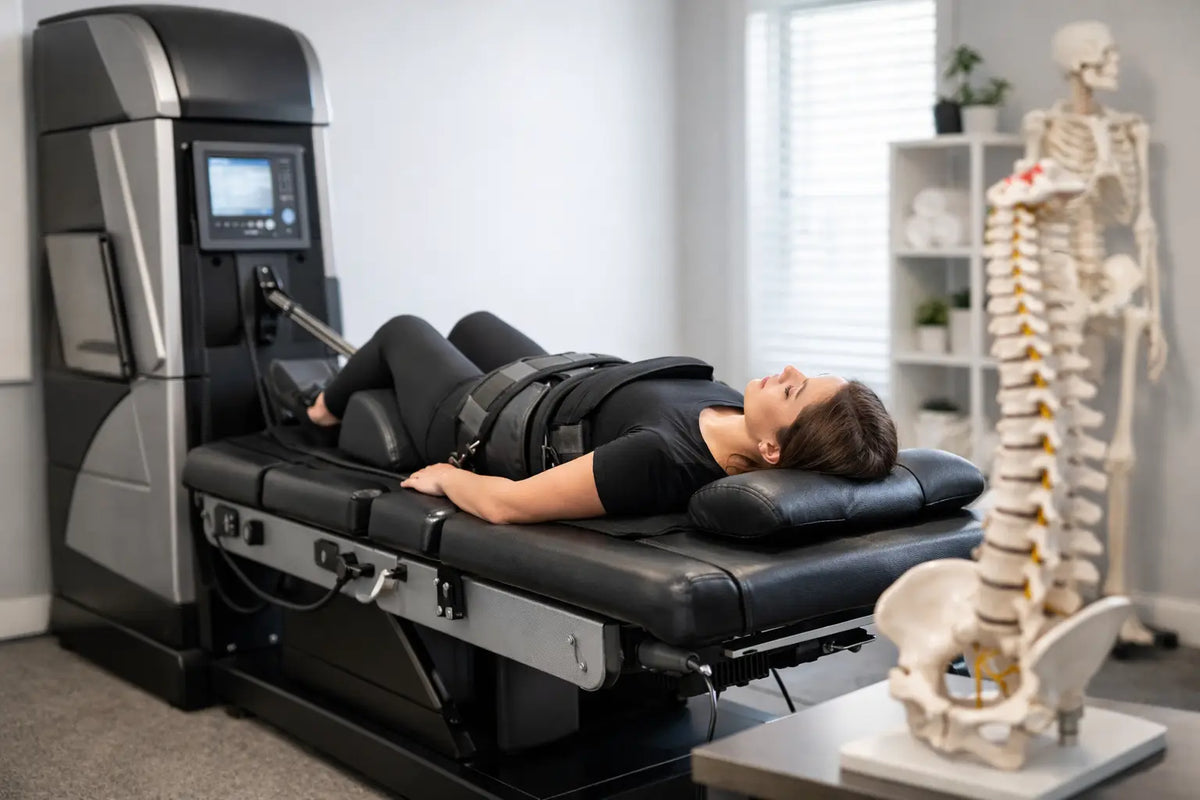
A decompression system can look impressive in a product photo and still become the slowest, least-used piece of equipment in the clinic. The difference usually comes down to setup time, patient positioning, table stability, and how precisely the system supports the treatment protocol. This spinal decompression equipment guide is built for practitioners who need equipment that performs under a full daily schedule, not occasional consumer wellness use.
For chiropractic, physiotherapy, and multidisciplinary rehabilitation practices, the right system is not simply a traction device. It is a treatment platform that must support controlled force delivery, repeatable positioning, patient comfort, clinician access, and dependable operation over years of use. Choosing well starts with the clinical application, then moves to the mechanical details that determine whether the equipment helps or hinders your workflow.
What Spinal Decompression Equipment Must Do
Spinal decompression equipment is designed to apply controlled traction forces to the spine while the patient is stabilized through harnessing, positioning components, or table sections. Depending on the clinical protocol, a system may be used for lumbar or cervical traction applications and may incorporate intermittent, sustained, or variable traction cycles.
The clinical objective is only one part of the buying decision. In a professional setting, the equipment must also make treatment repeatable. If a patient slips in the harness, if the table flexes under load, or if settings are difficult to access and reproduce, the system introduces variability that no busy practice needs.
A clinic-grade setup should give the practitioner practical control over treatment positioning and force parameters while maintaining a stable patient platform. It should also accommodate a wide range of body types without making transfers, setup, or cleanup unnecessarily difficult.
Choose the Right Equipment Category
There is no single best decompression configuration for every practice. The correct choice depends on whether decompression is a core service line, an occasional adjunct to manual care, or part of a broader rehabilitation program.
Dedicated spinal decompression systems
A dedicated system typically combines a purpose-built table with a computerized traction unit, patient harnessing, and programmed treatment controls. This category is a strong fit for clinics that plan to deliver decompression frequently and want a consistent, protocol-driven setup.
The advantage is specialization. Controls, harnesses, and table geometry are designed around traction delivery, often allowing more precise programming and a more standardized patient experience. The trade-off is that a dedicated system can occupy valuable treatment-room space and may have less utility for adjustments, soft-tissue work, or general rehabilitation procedures.
Traction-capable treatment tables
A traction-capable treatment table provides a more flexible foundation. Depending on its design, it may support manual traction, accessory traction units, or treatment approaches that combine traction with other modalities. This option often makes sense for physiotherapy and multidisciplinary clinics where one room must serve multiple treatment functions.
Versatility is valuable, but it should not be confused with compromise. If traction is a meaningful part of your care plan, verify that the table’s sections, attachments, stability, and patient restraint options are genuinely designed for the forces and positioning your protocols require.
Flexion-distraction and auto-flexion tables
For chiropractic practices, flexion-distraction and auto-flexion tables can serve a distinct clinical purpose. These tables are built to support controlled segmental motion and practitioner-directed treatment, rather than replacing the role of a dedicated computerized decompression system.
They are often the better investment when your technique relies on flexion-distraction, manual contact, and repeated table-assisted adjustments. A practice may use both categories, but they should be purchased for their respective treatment roles rather than treated as interchangeable equipment.
The Performance Specifications That Matter
Product features can be easy to compare and hard to evaluate. Focus on the specifications that affect treatment quality, patient safety, and daily reliability.
Frame strength and lift capacity
A rigid frame is the foundation of predictable traction treatment. When equipment shifts, rocks, or flexes during setup, it affects patient confidence and makes the clinician work harder to maintain position. Look for a clinic-grade frame, a published lift capacity, and construction intended for high-frequency professional use.
Capacity matters beyond the maximum patient weight. A higher-capacity table generally reflects a stronger structural platform and gives clinics greater flexibility when treating a diverse patient population. For a high-volume environment, a 600 lb-rated table platform provides a meaningful margin for patient access, positioning, and long-term durability.
Motorized height adjustment
Hi-lo elevation is not a luxury in a busy treatment room. It supports safer transfers, improves accessibility for patients with mobility limitations, and allows the clinician to set a more ergonomic working height. Smooth motorized elevation also reduces the interruptions that occur when a patient must climb onto a fixed-height table.
Evaluate the speed, stability, and control placement of the lift system. Foot controls can be useful when the practitioner needs hands free for patient support or positioning. The table should rise and lower smoothly under load, without distracting vibration or instability.
Treatment controls and programming
For computerized decompression equipment, inspect the interface closely. Can clinicians set and recall treatment parameters efficiently? Are changes to force, hold time, rest time, and treatment duration clear on the display? Can the controls be operated without stepping away from the patient during setup?
Advanced programming is useful only when it is easy to use consistently. A complicated interface can lead to workarounds, inconsistent documentation, and longer appointment times. Choose controls that match the complexity of your protocols and the training level of everyone who will operate the system.
Table sections and patient positioning
Decompression is only as controlled as the patient position. Review pelvic and thoracic stabilization, section design, cushioning, and access around the table. A patient who feels secure is more likely to remain relaxed and properly positioned through the session.
For lumbar applications, consider how the table accommodates lower-extremity positioning and whether the design allows the clinician to manage harness placement without excessive bending or reaching. For cervical applications, assess head support, angle adjustment, and the ability to maintain a neutral, comfortable setup. These details affect both patient tolerance and treatment repeatability.
Match the System to Your Workflow
Before comparing prices, map the system into a real appointment day. Ask where patients will enter and exit the table, who will set up the harnesses, how long cleaning takes between visits, and whether the room can support the necessary clinician access on both sides.
A system that requires extensive repositioning may work well in a spacious demonstration room but create friction in a compact clinic. Likewise, a dedicated decompression unit may be highly productive if it is booked consistently, but difficult to justify if it sits unused between occasional referrals.
Think about staffing as well. If assistants will prepare patients or monitor sessions, the controls and setup process should be clear enough to support reliable delegation within your clinic’s policies and training standards. If the treating provider handles every step, prioritize fast access, intuitive adjustments, and a layout that reduces repetitive strain.
Safety, Training, and Maintenance Are Part of the Purchase
No equipment feature replaces clinical judgment. Patient screening, diagnosis, contraindication review, informed consent, and protocol selection remain the responsibility of the licensed treating professional. Equipment should support a controlled treatment process, not encourage a one-size-fits-all approach.
Training should cover more than the startup screen. Your team should understand patient transfers, harness placement, emergency stop functions, positioning adjustments, cleaning procedures, and the manufacturer’s maintenance schedule. Keep operating instructions accessible in the treatment area, particularly when multiple providers or assistants use the system.
Serviceability deserves equal attention. Motors, actuators, upholstery, controls, and moving sections will eventually need inspection or replacement in a high-use clinic. Ask whether replacement parts and knowledgeable support are available, how warranty coverage is structured, and whether the manufacturer stands behind the frame for the long term. A lower upfront price can become expensive when downtime interrupts scheduled care.
How to Evaluate Value Beyond the Purchase Price
The best buying decision is rarely the cheapest system or the most feature-heavy one. It is the one that reliably supports the care you deliver and earns its floor space every week. Consider total ownership cost: installation, staff training, preventive maintenance, expected service life, upholstery durability, and the revenue impact of treatment-room downtime.
For growing practices, financing can preserve cash for staffing, marketing, and other operational needs. Still, the payment should follow a credible utilization plan. Estimate how many appropriate patients you expect to treat each week, the length of each session, and how the equipment fits into your existing visit flow. Conservative assumptions produce a more useful investment decision than optimistic projections.
TRL Tables approaches clinic equipment from that same operational perspective: stable treatment platforms, smooth motorized control, high-capacity construction, and support for practitioners who cannot afford weak equipment in a demanding schedule.
The right decompression system should make the treatment room feel more capable, not more complicated. Select the platform that fits your clinical method, protects patient comfort, and gives your team repeatable control from the first appointment to the thousandth.
Share:
Auto Flexion Chiropractic Table for Clinics
How to Choose Chiropractic Tables for Your Clinic