


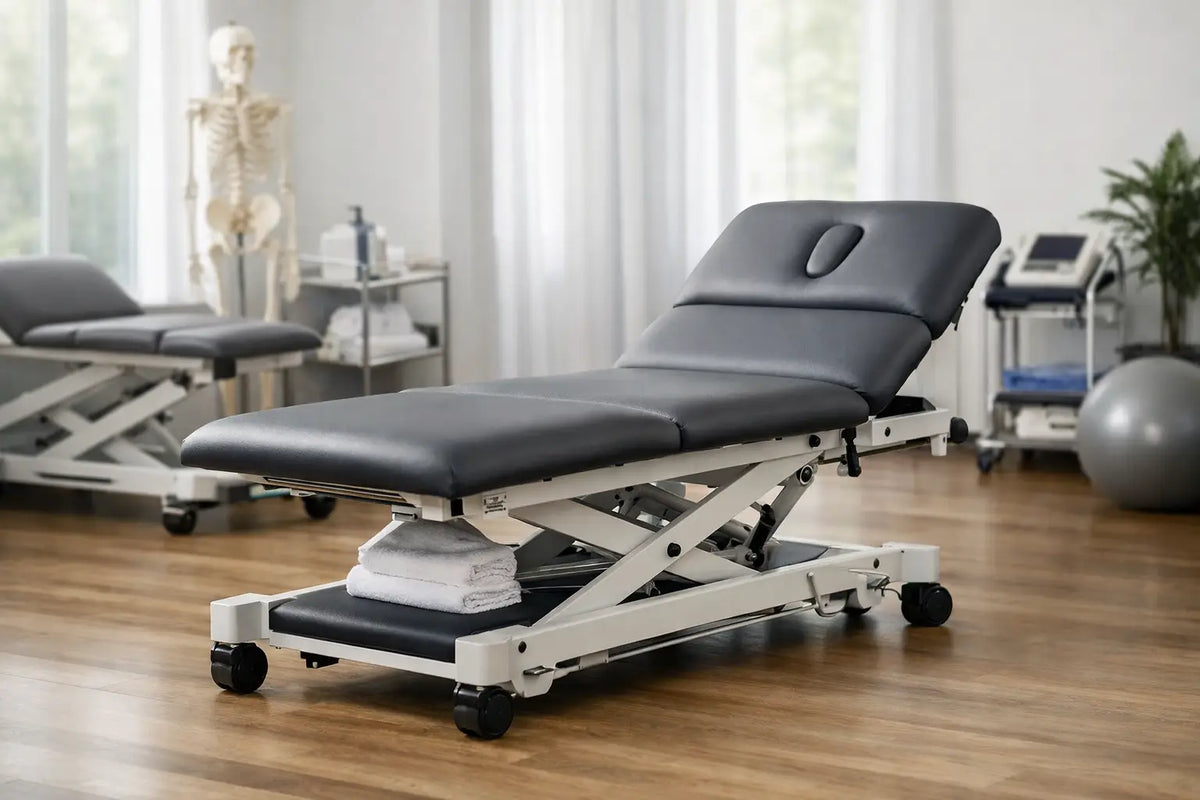
A treatment table is not a passive piece of furniture. It is the platform beneath every adjustment, manual therapy session, traction protocol, transfer, and reassessment your clinic performs. When the table flexes, drifts, hesitates during elevation, or feels unstable under load, it affects more than patient comfort. It interrupts clinical focus. Heavy duty treatment tables are engineered to prevent those compromises in treatment rooms where equipment is used continuously and expected to perform without hesitation.
For chiropractors, physical therapists, massage therapists, and rehabilitation teams, the right table supports better positioning, faster workflow, and a more confident patient experience. The question is not simply whether a table can hold a patient. It is whether it can hold up to the way your practice actually operates.
What Makes Heavy Duty Treatment Tables Different?
A heavy-duty table is defined by its structure, lifting system, stability, and intended use. Consumer-grade massage furniture and low-spec portable tables may be appropriate for occasional wellness services, but they are not designed for the repeated loading cycles, precise positioning demands, and patient variety of a professional clinic.
The frame is the starting point. A clinic-grade steel frame resists torsion when patients shift weight, practitioners apply manual force, or the table is raised to working height. That rigidity matters during spinal manipulation, mobilization, soft tissue work, and transfer assistance. A table should feel planted, not merely functional.
Lift capacity is equally significant, but capacity alone does not tell the full story. A 600 lb rated table, for example, should provide a meaningful margin for larger patients, treatment accessories, and the dynamic forces involved in care. The table also needs to maintain smooth, controlled movement throughout its range rather than slowing, straining, or becoming unstable near its upper limits.
Why Stability Changes Clinical Performance
The strongest equipment decisions are often made around workflow rather than specifications alone. A stable base lets a practitioner work with purpose. It reduces the need to compensate for table movement, reposition a patient repeatedly, or avoid certain techniques because the platform does not inspire confidence.
For chiropractic practices, stability supports more controlled adjustments and dependable flexion-distraction work. For physical therapy and rehabilitation settings, it makes transfers safer and allows clinicians to position patients at a workable height without asking them to climb onto a high surface. For massage and manual therapy providers, a solid table helps maintain consistent body mechanics through a full day of appointments.
Patient perception matters here as well. A patient who feels a table wobble during a transfer may become guarded before treatment begins. By contrast, a low-entry, stable, motorized table communicates that the clinic has invested in safe, professional care. That impression is especially valuable for older adults, post-operative patients, patients with mobility limitations, and anyone managing pain or balance concerns.
Motorized Elevation Is a Workflow Tool
In a high-volume practice, motorized elevation is not a luxury feature. It is a practical control point for clinician ergonomics and room efficiency. The ability to lower the table for entry and raise it to the practitioner’s preferred working height can reduce awkward bending, overreaching, and unnecessary patient repositioning.
The value depends on your clinical model. A practitioner who primarily performs short, standing adjustments may prioritize quick elevation speed and a stable elevated surface. A rehabilitation clinic may need a broad height range to support transfers, seated work, exercise preparation, and manual therapy. A multidisciplinary office may need tables versatile enough to serve several providers with different methods and preferred working heights.
Foot controls can be particularly useful because they allow adjustment without breaking contact with the patient or interrupting a treatment sequence. Smooth motor operation also matters. Abrupt movement can create anxiety for a patient already dealing with dizziness, acute pain, or limited mobility. Controlled elevation protects the treatment experience while keeping the clinician in command of the room.
Match the Table to the Treatment Method
There is no single best treatment table for every clinic. The correct configuration depends on what happens on the table most often.
A standard hi-lo table may be the right foundation for general physical therapy, massage, and multidisciplinary care. Clinics focused on chiropractic techniques may require specialized sections, drop mechanisms, abdominal breakaway capability, or flexion-distraction functionality. Practices offering spinal decompression or traction need equipment designed to manage those protocols accurately, with patient positioning and force application considered as part of the system rather than added as an afterthought.
Table width also requires a real trade-off. A wider surface can improve patient comfort, particularly for larger patients or prolonged treatments. However, excessive width can force shorter practitioners to reach farther during manual work. Upholstery, headrest configuration, sectional movement, and accessory compatibility should all be evaluated through the lens of your actual treatment patterns.
The Cost of Buying for the Short Term
Lower-priced equipment can appear attractive when opening a clinic or adding rooms quickly. But a table that requires frequent service, limits which patients can be treated comfortably, or creates workflow friction becomes expensive in ways that do not appear on the original invoice.
Downtime is one cost. A table that is out of service can force schedule changes, crowd patients into other rooms, or delay a treatment plan. Another cost is replacement. Equipment built for light use may need to be replaced well before a clinic-grade table reaches the end of its working life. There is also a less visible cost: clinician fatigue. If a table cannot reach the right height or does not support efficient positioning, that burden is repeated hundreds of times each month.
Premium tables require more upfront investment, and not every practice needs the most complex configuration available. A low-volume office with a narrow treatment scope may be better served by a simpler, durable electric hi-lo table than by a feature-heavy specialty system. The goal is not to buy every available option. It is to buy enough performance to support your patient load, clinical methods, and growth plans without creating an early equipment ceiling.
Questions to Ask Before You Buy
Before choosing a table, assess the conditions it will face over the next several years. Consider the heaviest patients you routinely treat, the number of daily elevation cycles, the treatments performed most often, and whether multiple providers will share the room. These details make a bigger difference than a generic product category.
Ask how the frame is warranted and whether replacement parts and technical support remain available after purchase. A lifetime frame warranty can speak to structural confidence, but serviceability matters just as much for motors, controls, cushions, and moving sections. Equipment should be built to remain useful, not treated as disposable when a component eventually needs attention.
Also consider room layout. Measure doorways, treatment room clearances, electrical access, and the space required for clinicians to work around the table. A table can have the right specifications on paper and still create problems if it blocks circulation or limits access from the sides.
Build Treatment Rooms That Keep Pace
A serious treatment room should help clinicians work accurately and help patients feel secure from the moment they enter. That starts with equipment that does not ask either person to compromise. TRL Tables designs clinic-grade platforms for practices that need high lift capacity, controlled motorized movement, and the structural strength to perform day after day.
The right table becomes part of your clinical standard. It supports safe transfers, more consistent practitioner mechanics, and treatment delivery that feels deliberate rather than improvised. Choose the platform that fits the care you provide now, then give your clinic enough strength and control to meet the patients you plan to serve next.
Share:
Flexion Distraction vs Decompression: Key Differences
Chiropractic Table vs Massage Table Differences