


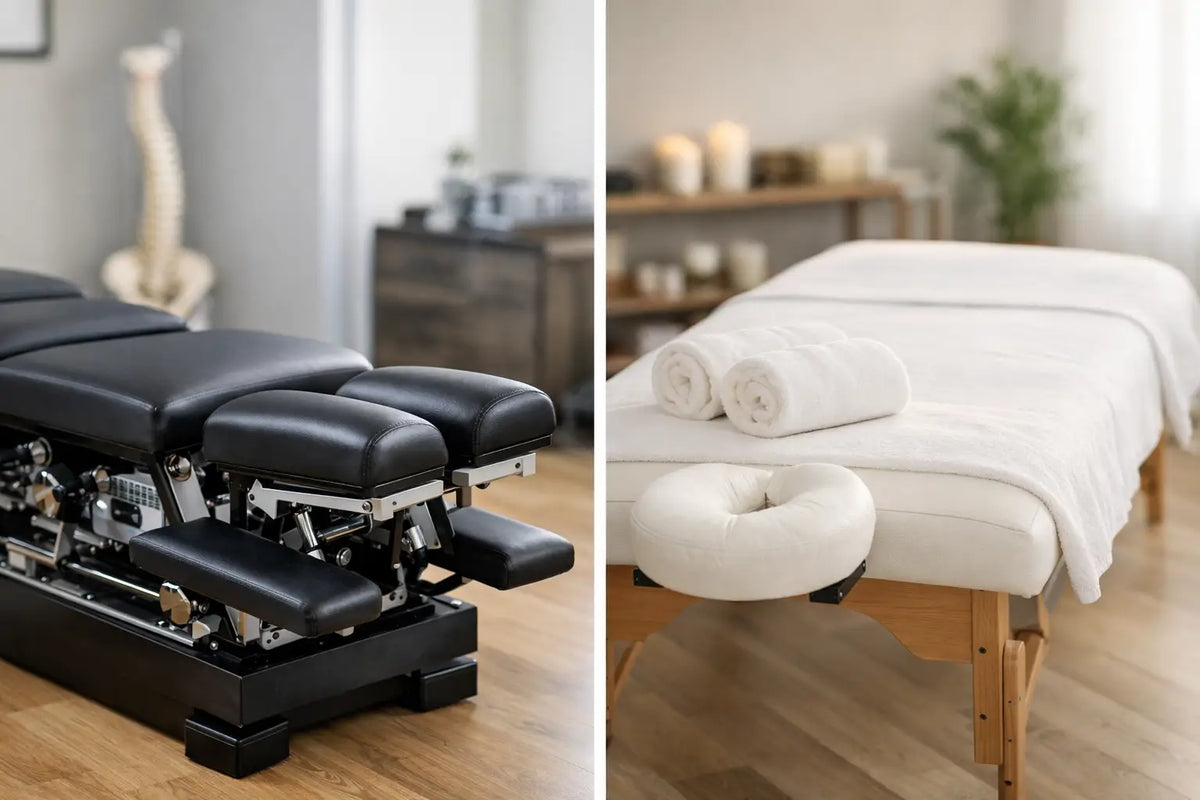
A treatment table is not just a surface beneath the patient. It determines how efficiently you can position, assess, mobilize, adjust, and transition through a full day of care. The chiropractic table vs massage table decision comes down to far more than upholstery, width, or price. It is a decision about clinical function, practitioner mechanics, patient access, and whether the equipment can keep pace with your treatment model.
A massage table can be an excellent tool for soft-tissue work. A chiropractic table is engineered for a different set of demands: segmental positioning, controlled force delivery, repeated adjustments, and, in many clinics, high-volume use. Buying one when you need the other can create daily workflow compromises that no accessory will fully solve.
Chiropractic Table vs Massage Table: The Core Difference
The simplest distinction is purpose. A massage table is designed primarily to support a patient comfortably while a therapist performs hands-on soft-tissue treatment. A chiropractic table is designed to actively support chiropractic procedures, including spinal and extremity adjustments, flexion-distraction protocols, pelvic work, and precise patient positioning.
That difference affects nearly every part of the table. Chiropractic tables commonly include specialized sections, such as cervical, thoracic, lumbar, pelvic, or ankle pieces. Depending on the configuration, these sections may elevate, drop, flex, extend, laterally flex, or move through controlled ranges of motion. Those movements allow the practitioner to create access and apply treatment with greater specificity.
Massage tables generally use a simpler, flat-platform design. Some professional models offer adjustable backrests, armrests, face cradles, or electric height adjustment. Those features improve comfort and ergonomics for massage, but they do not replace the mechanical treatment functions required for chiropractic adjusting.
Treatment Functions Drive the Right Choice
A clinic should select a table based on what happens on it all day, not on the table's appearance or its lowest advertised price.
What a Chiropractic Table Is Built to Do
A chiropractic table supports force-based and motion-based interventions. Drop sections are a clear example. They allow a practitioner to preload a joint and deliver a controlled thrust as the section releases. This can reduce the amount of force transferred through the patient and practitioner while supporting a targeted adjustment.
Flexion-distraction tables add another layer of capability. A moving pelvic section can create controlled flexion, distraction, and lateral motion through the lumbar spine. For practices treating disc-related presentations, chronic low back conditions, or patients who require lower-force techniques, this is not a cosmetic upgrade. It is central to the procedure.
Hi-lo elevation is equally significant. Motorized height adjustment brings the table to a practical working height for each patient and technique. It supports safer transfers, reduces repeated bending by the practitioner, and improves access for older adults, post-operative patients, and patients with limited mobility. In a multidisciplinary clinic, that versatility can make one room usable for chiropractic, rehabilitation, manual therapy, and assessment.
What a Massage Table Is Built to Do
A quality massage table prioritizes stable support, patient comfort, and therapist access during longer soft-tissue sessions. Width, cushioning, face-cradle comfort, and quiet height adjustment often matter more than segmented movement. A massage therapist may need room to move around the patient, drape effectively, and work across broad tissue areas without the table interfering with their stance.
For Swedish massage, deep tissue work, lymphatic techniques, or relaxation-focused care, a dedicated massage table can be the better fit. It may offer a more accommodating top surface and a simpler setup for sessions where the patient remains in one position for an extended period.
The limitation appears when the table is expected to perform outside that role. A flat table can support basic manual therapy or a limited range of chiropractic techniques, but it cannot create the precision or workflow advantages of dedicated drop, flexion, or decompression components.
Stability and Lift Capacity Are Clinical Features
Treatment tables experience more stress than their specifications may suggest. Patient weight is only one factor. Dynamic loading occurs when a patient sits, turns, transfers, or receives an adjustment. A table can feel adequate during a showroom test yet reveal flex, rocking, noise, or uneven movement after months of full clinic use.
For chiropractic applications, frame strength and load capacity deserve close scrutiny. A clinic-grade table should remain planted during adjustments, including with larger patients and repeated force delivery. A higher lift capacity provides a wider operating margin, but capacity alone is not the whole story. Frame geometry, weld quality, actuator performance, base design, and section locking all influence real-world stability.
Massage tables also need to be stable, especially for deep tissue work. However, a portable or consumer-oriented massage table may be engineered around transportability rather than the repeated dynamic forces of a chiropractic practice. Lightweight construction is useful for mobile massage professionals. It is usually not the priority for a fixed clinical environment treating multiple patients per day.
Height Adjustment Changes Practitioner Workflow
Fixed-height tables remain common, but they require the practitioner to adapt to the table rather than setting the table for the procedure. That may be workable in a low-volume setting with one practitioner and a narrow treatment style. Over time, however, repeated awkward positioning can affect efficiency and practitioner fatigue.
Electric hi-lo tables provide a more controlled workflow. You can lower the surface for patient entry, raise it for standing procedures, and set different working heights for cervical work, extremity adjustments, soft-tissue techniques, or rehabilitation exercises. The ability to reposition without interrupting care is particularly valuable when a room is shared by chiropractors, physical therapists, massage therapists, and rehab staff.
Not every practice requires a fully featured motorized table. A practitioner using primarily low-force techniques in a compact office may prioritize a specific headpiece or drop configuration over extensive elevation travel. Still, when comparing tables, consider the cumulative cost of small delays: assisting patients onto a high surface, manually repositioning equipment, or adjusting your own stance around a fixed-height platform hundreds of times per week.
Patient Experience Is More Than Cushioning
Comfort matters on both table types, but clinical comfort has several dimensions. Proper cushioning helps patients relax and tolerate longer sessions. Yet patients also notice whether getting on and off the table feels secure, whether the table shifts during treatment, and whether position changes are smooth and controlled.
A motorized chiropractic table can improve the experience for patients who are apprehensive, injured, deconditioned, or physically limited. Lower entry height reduces the step up. Stable, predictable section movement supports confidence during treatment. Purpose-built headpieces and support sections can also make prone positioning more tolerable for patients with cervical sensitivity, pregnancy-related needs, or restricted mobility.
A massage table may feel more familiar and spacious to a client receiving a traditional massage. That is an advantage when relaxation and extended soft-tissue access are the primary goals. For clinical care involving repeated repositioning, orthopedic testing, or adjustments, the more relevant question is whether the table helps the patient get into the right position safely and consistently.
Can One Table Serve a Multidisciplinary Clinic?
Sometimes. The right choice depends on service mix, patient volume, and room utilization.
A premium hi-lo chiropractic table can function effectively in many multidisciplinary settings because it provides adjustable height, strong capacity, and useful positioning control. It may accommodate manual therapy, exercise instruction, basic massage work, and rehabilitation procedures alongside chiropractic care. For a growing clinic with limited treatment rooms, that flexibility can improve return on floor space.
But a general-purpose setup has limits. If massage therapy is a major revenue line with dedicated 60- or 90-minute sessions, therapists may benefit from a table selected specifically for their techniques, room layout, and patient comfort requirements. Likewise, if your chiropractic practice relies on flexion-distraction, traction, or decompression, select equipment that performs those procedures directly rather than asking a standard table to approximate them.
The most efficient clinics do not force every provider into the same equipment category. They standardize where it improves training, maintenance, and workflow, then equip specialized rooms for the procedures that demand specialized tools.
How to Evaluate the Table Before You Buy
Start with your actual treatment day. Consider your most common procedures, the percentage of patients needing assistance with transfers, the heaviest patients you routinely treat, and the number of adjustments or sessions performed per room. These answers reveal more than a generic feature checklist.
Then assess the table's operating details. Does the base remain stable under dynamic load? Are controls positioned where staff can use them without breaking workflow? Do sections lock securely? Is the motor smooth and appropriately quiet? Can the upholstery, moving components, and serviceable parts withstand routine cleaning and years of use?
Long-term support belongs in the decision as well. A treatment table is productive equipment, not disposable furniture. Warranty coverage, replacement parts availability, responsive service, and build quality affect total cost of ownership. TRL Tables builds clinic-grade platforms around those operating realities, including high-capacity frames, controlled elevation, and specialized treatment configurations for serious treatment rooms.
A massage table is the right tool when soft-tissue care is the primary service. A chiropractic table is the right tool when precision adjustment, patient positioning, and repeatable clinical mechanics shape the day. Choose the table that removes friction from your actual care process, so your team can spend more time treating and less time working around the equipment.
Share:
Heavy Duty Treatment Tables for Busy Clinics
How to Finance Clinic Equipment Without Slowing Growth