


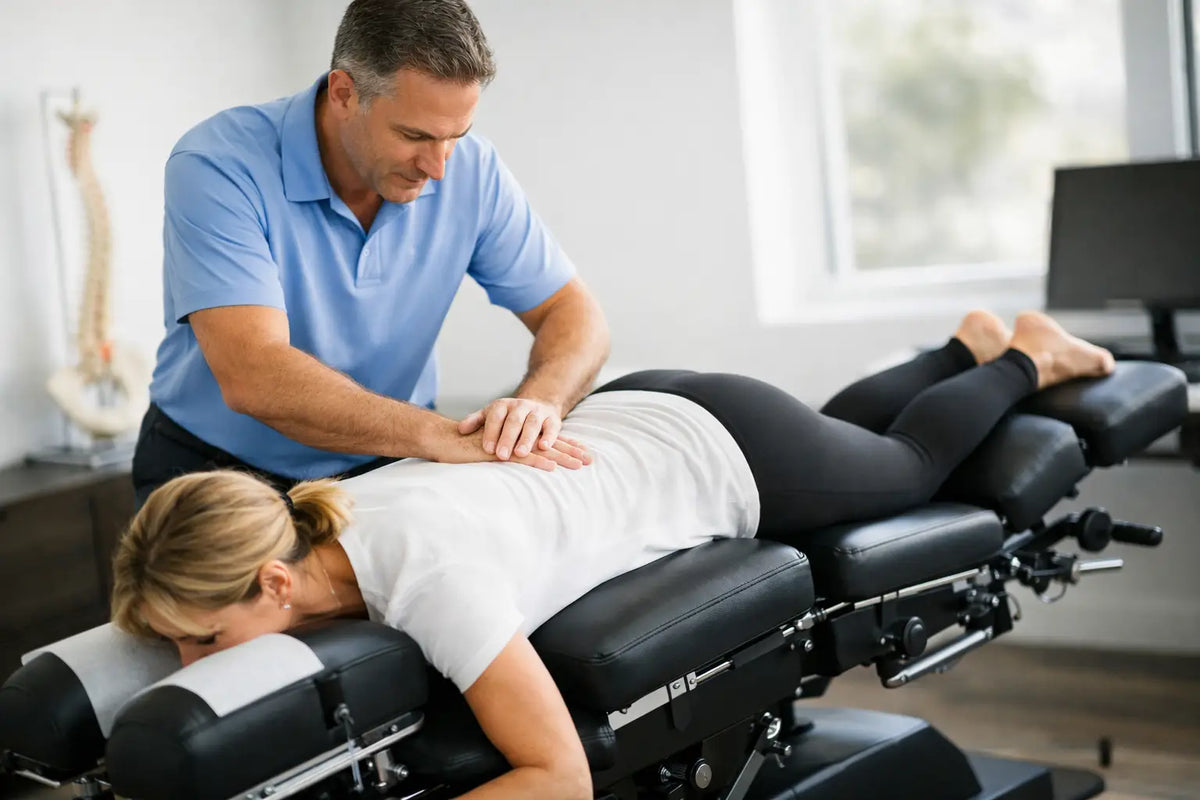
A patient with acute low back pain may tolerate a slow, supported movement far better than a forceful adjustment. That is the practical idea behind what is flexion distraction: a table-assisted chiropractic technique that uses controlled motion and clinician-applied contact to mobilize the spine with precision.
For practitioners, flexion distraction is more than a treatment method. It is also an equipment decision. The table must move predictably, hold position under load, provide stable patient support, and allow the clinician to direct force without fighting the mechanics of the equipment. In a busy treatment room, those details shape both treatment delivery and workflow.
What Is Flexion Distraction?
Flexion distraction is a manual chiropractic technique performed on a specialized treatment table with movable sections, most commonly a pelvic section that can be gently lowered or moved through a controlled flexion pattern. While the patient is prone, the practitioner stabilizes a specific spinal segment with one hand and guides the table movement with the other.
The word flexion refers to bending movement, while distraction describes a gentle separating or unloading force applied through the spinal region. Rather than relying on a single high-velocity thrust, the practitioner uses repeated, measured cycles of movement. The goal is to introduce motion at the intended region while keeping the patient supported and comfortable.
Although commonly associated with lumbar care, flexion distraction can be adapted for different regions of the spine depending on the table design, the clinician's training, and the patient's presentation. It is often incorporated into a broader plan that may include exercise, soft-tissue work, education, activity modification, or other manual therapy approaches.
How Flexion Distraction Works in Practice
The patient typically lies face down on a flexion distraction table. The practitioner assesses the area of concern, positions the patient, and uses a contact point over the relevant spinal segment or pelvic region. The moving portion of the table then travels through a controlled arc or downward motion while the practitioner maintains segment-specific guidance.
That setup changes the mechanical demands of manual care. The table helps create motion, allowing the practitioner to focus on contact, direction, timing, and patient response. A quality table should make those movements smooth and repeatable, not abrupt or inconsistent.
The technique is often delivered in several short cycles. The practitioner can adjust the range of motion, the pace, the contact point, and the treatment angle based on clinical findings and tolerance. That adjustability is central to the method. Flexion distraction is not one fixed maneuver performed the same way for every patient.
For example, a clinician may use a smaller, gentler range for a highly irritable patient and progress movement as symptoms and tolerance allow. Another patient may require a different setup to address pelvic mechanics, side-bending, or rotational components. Clinical judgment remains the driver. The table is the platform that makes controlled application possible.
Why Clinicians Use a Flexion Distraction Table
The strongest case for flexion distraction is control. A dedicated table can help clinicians deliver a consistent movement pattern without manually lifting, holding, or repositioning the patient through every repetition. This can reduce unnecessary physical strain for the practitioner while making treatment feel more supported for the patient.
Patient comfort also matters. Some patients are apprehensive about thrust-based procedures, while others are limited by pain, guarding, body size, mobility restrictions, or difficulty changing positions. A stable table with a properly designed pelvic section and accessible controls can make positioning more efficient and less disruptive.
For a clinic, the value extends beyond the individual treatment. When a table is engineered for daily clinical use, it supports repeatable setup, smoother room turnover, and consistent delivery across providers. A table that flexes unpredictably, shifts under load, or requires constant manual adjustment introduces friction into every appointment.
That is why table construction should be evaluated as seriously as technique capability. Frame rigidity, patient capacity, section design, elevation range, upholstery support, pedal placement, and actuator performance all influence whether the table performs like a clinical instrument or simply looks like one.
Common Clinical Applications
Flexion distraction is frequently used as part of conservative care for patients presenting with mechanical low back complaints. Practitioners may consider it when a patient has pain with certain movements, reduced lumbar mobility, muscle guarding, or difficulty tolerating other forms of manual treatment.
It may also be used in care plans involving radiating symptoms, disc-related presentations, degenerative changes, or postural loading concerns. These categories require careful evaluation, however. A diagnostic label alone does not determine whether flexion distraction is appropriate, nor does it predict an individual response.
The technique is best understood as one tool within a clinical system. It does not replace a thorough history, examination, appropriate referral decisions, or active rehabilitation. Outcomes depend on the patient, the diagnosis, the irritability of the condition, the provider's skill, and the overall plan of care.
What Flexion Distraction Is Not
Flexion distraction is not a guaranteed solution for low back pain, and it should not be presented as one. Some patients respond well to gentle, table-assisted mobilization. Others may need a different manual approach, a more exercise-centered plan, co-management, imaging review, or referral for medical evaluation.
It is also not the same as motorized spinal decompression, even though both may involve concepts such as unloading and controlled positioning. Flexion distraction is generally a hands-on technique in which the clinician directs the movement and contact. Decompression systems typically use programmed traction forces and treatment protocols. A well-equipped clinic may use both, but they serve different roles.
Finally, it is not appropriate for every patient. Practitioners should screen for red flags and contraindications, including suspected fracture, spinal instability, certain inflammatory or infectious conditions, severe osteoporosis, progressive neurologic deficits, or symptoms that warrant urgent medical evaluation. The exact decision depends on the patient's history, exam findings, and applicable standards of care.
Choosing Equipment for Flexion Distraction Care
A flexion distraction table must earn its place in the treatment room. The most relevant features are not cosmetic upgrades. They are the components that affect control, safety, comfort, and long-term reliability under repeated daily use.
Start with the moving section. It should provide a smooth, controlled range of motion without binding, lateral play, or sudden drops. The clinician needs to feel the movement clearly enough to match treatment force to patient tolerance. A vague or unstable mechanism compromises precision.
Next, consider frame strength and patient capacity. A treatment table experiences dynamic loading, not just static body weight. Heavier patients, repeated movement cycles, side-loading during positioning, and years of high-volume appointments all place demands on the frame and lift system. Clinic-grade capacity and a stable base are fundamental requirements.
Elevation is equally practical. A hi-lo table allows the practitioner to bring the patient to an efficient working height, improve access for patients with mobility limitations, and reduce the cumulative strain of low working positions. Foot controls can further improve workflow by allowing height adjustments without breaking contact or stepping away from the patient.
Finally, look at serviceability. A table is a long-term operational asset. Access to parts, responsive support, durable upholstery, and a meaningful frame warranty matter far more after the sale than they do on a product page. TRL Tables designs professional treatment platforms around this reality: precise movement, strong construction, and performance built for serious treatment rooms.
A Technique That Depends on Precision
Flexion distraction works best when the method, the patient evaluation, and the equipment are aligned. The clinician must be able to assess, position, and apply movement with intent. The patient must be an appropriate candidate for conservative manual care. And the table must respond smoothly enough to support the technique rather than limit it.
For clinics that use flexion distraction regularly, the right table is not a passive piece of furniture. It is part of the treatment system - supporting better positioning, more repeatable mechanics, and a more professional patient experience with every controlled movement.
Share:
Traction System Setup for Clinical Precision
Does Traction Therapy Need Tables? Clinical Guide