


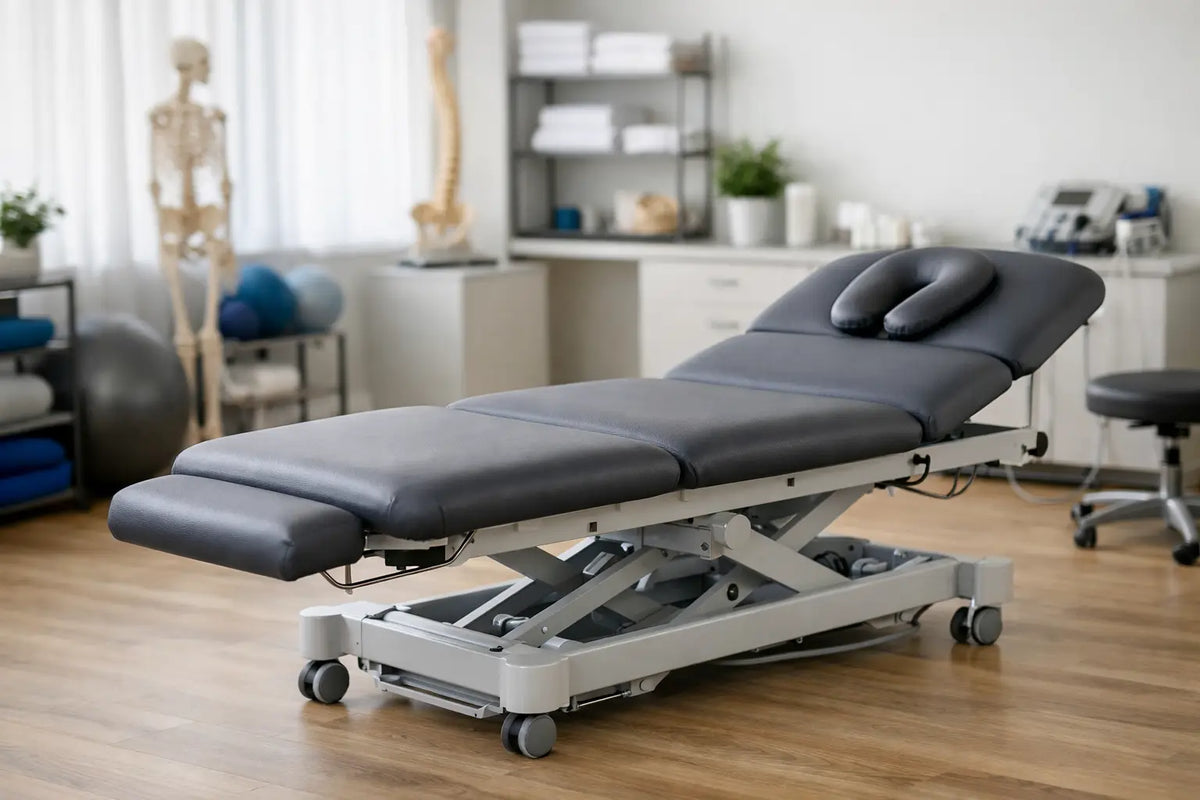
A treatment table is not background furniture in a serious clinic. It is the surface that determines how reliably you can position a patient, apply a technique, transition between treatments, and protect your own body through a full day of care. The right therapy tables support clinical precision. The wrong ones introduce instability, wasted motion, limited access, and compromises that patients can feel.
For chiropractors, physiotherapists, massage therapists, and rehabilitation teams, table selection should begin with the work performed in the room - not with color, price alone, or a generic feature list. A high-volume adjustment room has different demands than a traction suite. A multidisciplinary clinic may need flexible equipment that supports manual therapy, mobility work, post-surgical rehabilitation, and longer treatment sessions without forcing clinicians to work around the table.
What Separates Professional Therapy Tables From Basic Models
Clinic-grade therapy tables are engineered for repetitive, loaded use. That distinction matters when a table is raised and lowered dozens of times per day, used by patients with varied mobility levels, and expected to remain stable during manual treatment.
Frame construction is the foundation. A rigid steel frame reduces flex and side-to-side movement, helping the practitioner maintain controlled contact during adjustments, soft-tissue work, and rehabilitation procedures. Capacity matters for the same reason. A 600 lb working capacity gives a clinic more confidence when treating larger patients and when applying force through a table section.
Motor performance is equally practical. Smooth, quiet elevation allows patients to transfer at a lower height and lets the clinician set a working position without interrupting treatment flow. A table that hesitates, rocks, or raises too slowly can turn a simple positioning change into an unnecessary disruption. In busy practices, those small interruptions compound across every appointment.
Upholstery and cushioning should be considered clinical components, not finishing details. The surface needs to be supportive enough for controlled treatment while remaining comfortable during longer sessions. It should also stand up to frequent cleaning and resist premature wear at high-contact areas. Soft consumer-grade padding may feel appealing at first, but it can break down, lose support, and undermine positioning accuracy over time.
Match the Table to the Treatment Method
There is no single best table for every practice. The right configuration depends on treatment techniques, patient population, room layout, and the level of adjustability required. Buying a table with features that do not support your care model adds cost without improving outcomes. Under-specifying the table can be just as costly when it limits the services your clinic can confidently deliver.
Chiropractic and Flexion Distraction
Chiropractic practices using flexion distraction need more than an elevated flat surface. Sectional design, controlled movement, pelvic and thoracic support, and stable patient positioning all affect the consistency of the technique. The table should enable the practitioner to apply treatment with repeatable mechanics rather than compensate for loose sections or limited travel.
Auto-flexion and specialized flexion distraction systems can improve workflow where those protocols are central to the practice. The trade-off is specialization. These systems are a strong investment when they support the treatments performed every day, but a general adjusting room may gain more value from a versatile hi-lo table with the right drop and sectional options.
Physiotherapy and Rehabilitation
Physiotherapy and rehab environments often require the widest range of table heights and patient positions. A motorized hi-lo table can make transfers safer for patients recovering from surgery, managing neurological conditions, or dealing with reduced mobility. It also gives clinicians the ability to work at a more appropriate height during manual therapy, exercise preparation, and mobility assessment.
Look closely at the usable height range, not only the maximum lift height. A table that lowers sufficiently can reduce the step-up burden for patients. A table that rises smoothly and remains stable at working height supports better ergonomics for taller clinicians and more demanding hands-on techniques.
In a multidisciplinary setting, sectional top configurations become especially valuable. Head sections, arm supports, and adjustable body sections can accommodate prone, supine, seated, and side-lying treatment without moving the patient to another room or improvising with pillows and accessories.
Massage and Manual Therapy
Massage therapists may prioritize patient comfort and therapist access, but professional requirements still apply. Consistent elevation is often one of the most meaningful upgrades because it allows the therapist to maintain leverage without repeatedly bending or overreaching. A strong frame also creates a more secure patient experience during deeper work or repositioning.
Face cradle design, arm support, padding density, and easy-clean upholstery deserve careful attention. Yet comfort should not be confused with excessive softness. The best surface provides enough support to keep the body properly positioned while reducing pressure discomfort during longer appointments.
Traction and Decompression
Spinal traction and decompression require dedicated equipment designed around controlled force, patient stabilization, and repeatable protocols. A general table cannot replace a purpose-built decompression system simply because it can recline or elevate. Clinics offering these services should assess the treatment system as a complete clinical platform, including belts, controls, patient setup, and the ability to document consistent treatment parameters.
Features That Improve Daily Workflow
A table earns its place in a treatment room by reducing friction between appointments. Foot controls, for example, allow elevation changes without requiring the clinician to break contact or reach for a hand switch. This is a modest feature with a meaningful workflow benefit in rooms where patients are repositioned frequently.
Locking casters can also be useful when room flexibility matters. They make it possible to clean thoroughly, reconfigure a space, or create temporary access without sacrificing stability once the table is in use. For fixed treatment rooms, a stationary frame may be the more direct choice. The decision depends on how often the room must change function.
Sectional adjustability should be purposeful. A headrest that supports cervical positioning, a thoracic break that assists with examination, or a pelvic section that serves a defined technique can improve treatment delivery. Features become liabilities when they add complexity, maintenance points, or movement without a clear clinical use.
Controls deserve the same scrutiny. Simple, responsive controls are often preferable to a crowded interface that slows down routine tasks. Advanced touch controls can be valuable when they provide precise positioning, saved settings, or repeatable treatment functions. The priority is not technology for its own sake. It is dependable control at the moment the clinician needs it.
Calculate Value Beyond the Purchase Price
The lowest upfront price rarely represents the lowest equipment cost over the life of a table. Downtime, repairs, unstable performance, upholstery replacement, and a poor patient transfer experience all carry an operational cost. A table that lasts through years of daily use and remains dependable when the schedule is full protects both revenue and clinical confidence.
Evaluate warranty coverage carefully, especially the frame, motor, and moving components. Also consider whether replacement parts and responsive support are available in North America. A premium table is a long-term clinical asset, and serviceability matters once the initial purchase is no longer the focus.
Financing can make it practical to choose the configuration that fits the clinic’s actual needs rather than settling for a short-term compromise. That approach is most sensible when the equipment improves capacity, supports billable services, reduces clinician strain, or strengthens the patient experience in a visible way.
TRL Tables builds treatment equipment for this level of decision-making: high-capacity frames, controlled motorized elevation, specialized treatment configurations, and support for clinics that expect their equipment to perform every day.
A Better Way to Choose Therapy Tables
Before comparing models, map the patient journey in each treatment room. Consider how patients enter and transfer, which positions are used most often, what techniques require the greatest stability, and where clinicians lose time during setup. Then identify the table functions that directly solve those issues.
It is also worth planning for the practice you are building, not only the schedule you have this month. A growing rehab clinic may need higher capacity and broader positioning options. A chiropractor adding decompression should assess whether the room, workflow, and patient demand justify dedicated equipment. A massage practice adding medical referrals may need a more professional hi-lo platform than a fixed table can provide.
The strongest equipment choice is the one that lets clinicians work with confidence, lets patients move through care more comfortably, and continues performing when the treatment day is at its busiest.
Share:
Best Massage Tables for Clinics That Work Harder
Professional Treatment Tables for Serious Clinics