


Clinic equipment planning guide. This guide focuses on operational purchasing decisions, not individual treatment recommendations.
A practical room-by-room framework for selecting a treatment table when massage, physiotherapy and hands-on assessment share a space.
Why the appointment mix matters
A shared treatment room is rarely used for only one task. A physiotherapist may alternate assessment, hands-on treatment and exercise instruction; a massage therapist may need extended prone and supine positioning; a multidisciplinary clinic may book different practitioners into the same room on different days. Rather than starting with the longest feature list, write down what actually happens during a typical appointment. Identify how often the patient changes position, whether the practitioner needs access from both sides, and whether a table must be raised or lowered between clients.
Build a visit-type matrix
Create a simple matrix with rows for intake and assessment, prone treatment, supine treatment, seated positioning, and transition to standing. Across the top, record patient transfer needs, clinician working height, access around the head and foot, and accessories used. Mark each item as essential, useful or optional. For example, an electric height adjustment may matter across nearly every visit, while specialized positioning may be relevant only for one practitioner. Test the matrix against your busiest schedule, not just a quiet demonstration.
Compare actual product configurations
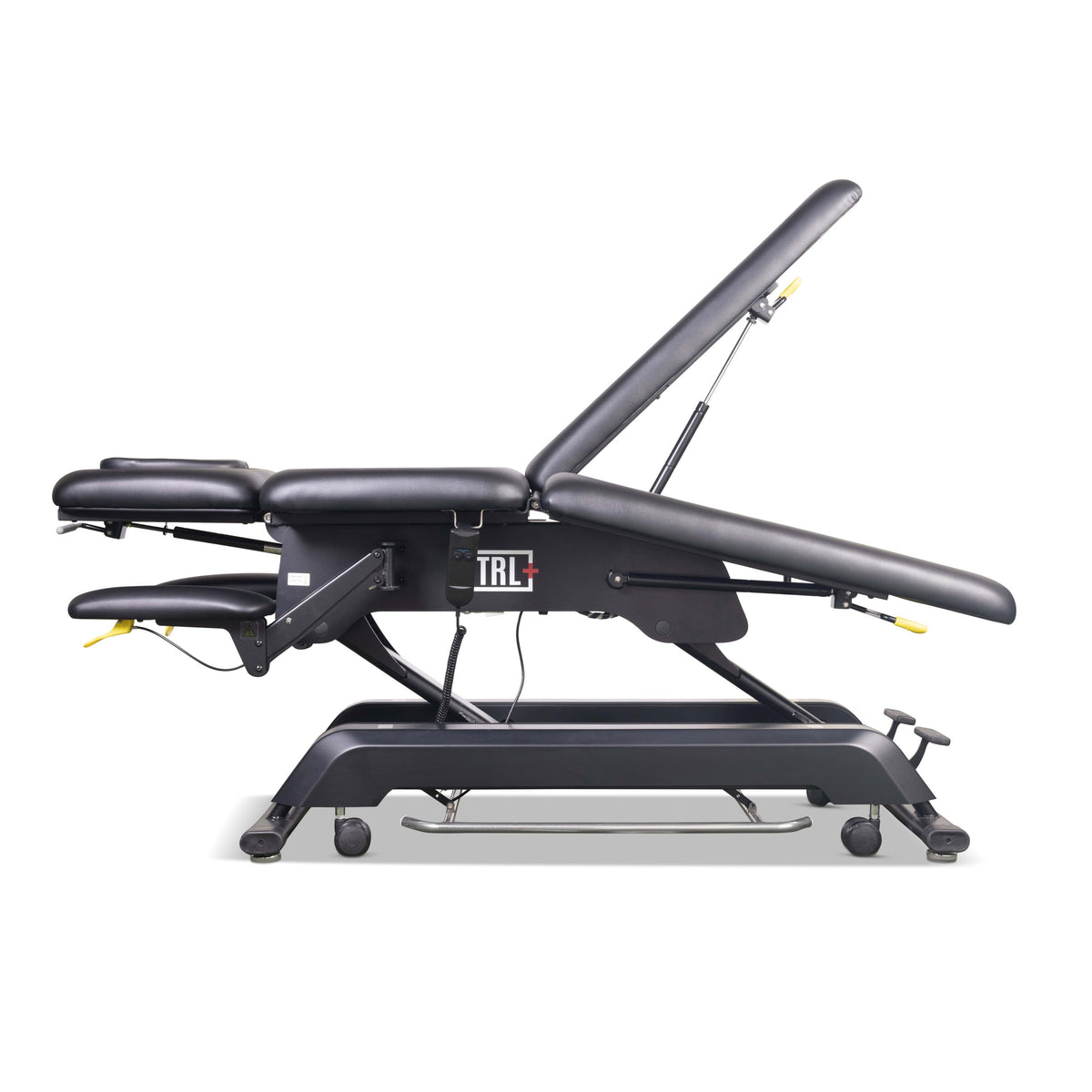
TRL Tables offers different approaches to shared-room equipment. The Model Y Supreme is marketed for physiotherapy, massage and stretching workflows; compare its available positioning configuration against your appointment matrix. The Model X Elite is another electric treatment-table option worth evaluating when height changes and everyday hands-on access are priorities. These are not interchangeable specifications: check the current product listing for the exact sections, accessories, dimensions and controls of the configuration you plan to order. Ask for a demonstration of the movements you will use rather than assuming that a product name guarantees a particular feature.

Room clearance is part of the purchase
Measure usable floor space after cabinets, stools, doors and carts are installed. Leave enough access for a clinician to move around both sides, and verify that any articulating sections or accessories can move without striking a wall. If patients use mobility aids, assess transfer routes and accessibility requirements for your jurisdiction. A table that fits on a floor plan can still be awkward when a patient, practitioner and equipment cart occupy the room simultaneously.
Test the complete appointment sequence
During a showroom visit or video demonstration, walk through one realistic appointment: patient approaches, transfers onto the table, changes position, receives treatment, sits up and exits. Note whether the clinician must reposition cords or stools, whether controls are easy to reach, and whether upholstery and accessories can be cleaned according to the manufacturer's instructions between appointments. Ask who will receive the shipment, how the crate enters the building and who will complete assembly or inspection.

Decision checklist
Before ordering, document the primary practitioner, top three appointment types, required movements, floor measurements, delivery constraints, available electrical outlets and the person responsible for maintenance. Confirm the current warranty, shipping method and any optional delivery charges in writing. If two models satisfy the essential tasks, compare total installed cost and serviceability rather than purchasing unused features.
FAQs
Can one table serve massage and physiotherapy?
Often, but only if its positioning, access and adjustment features suit the actual treatments and patients. Verify the chosen configuration rather than assuming all electric tables work alike.
Should every shared room use the same model?
Standardization can simplify staff training and accessories, but a specialized room may justify a different table. Base the decision on appointment volume and clinical workflow.
What should we request before buying?
Current dimensions, controls, configuration details, delivery terms, warranty documentation and a demonstration of the movements you expect to use.
Product details and availability may change. Verify the current listing and written quotation before purchase.
Share:
Freight Delivery Inspection Checklist for Heavy Treatment Tables
Treatment Table Upholstery Care: Cleaning, Disinfecting and Protecting Surfaces