


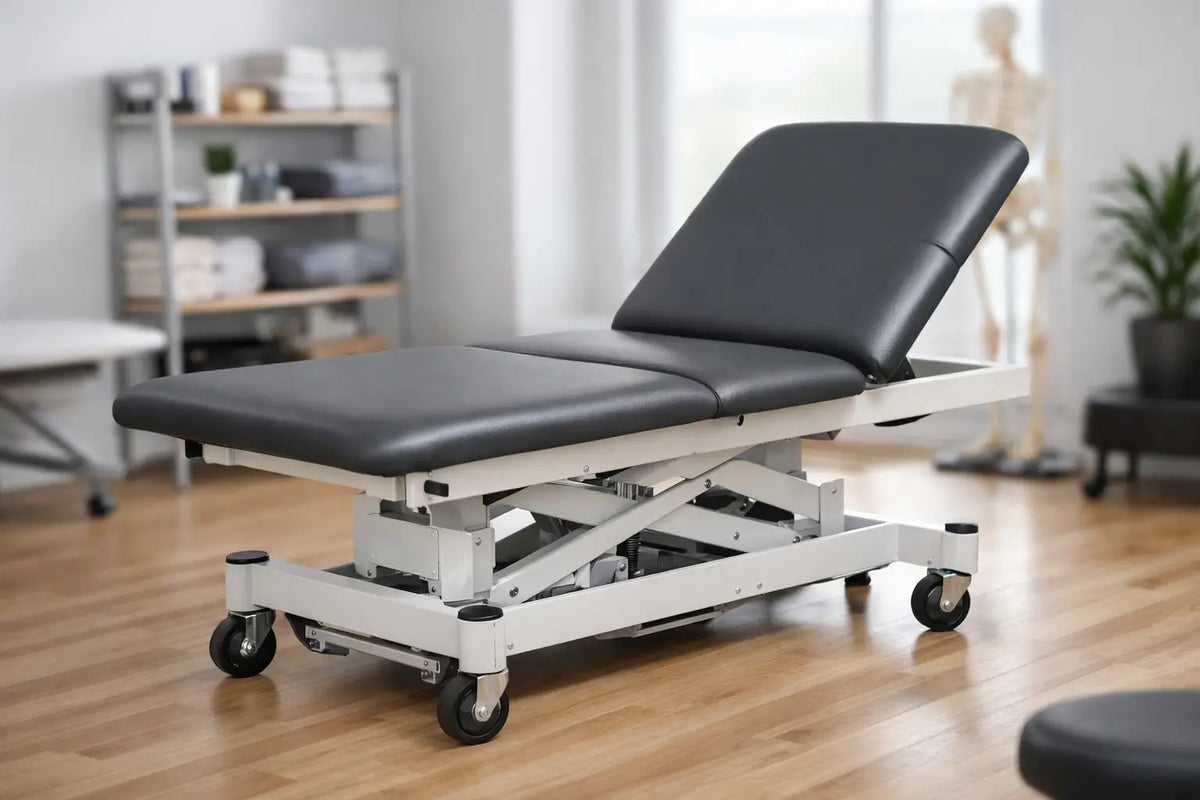
The moment a patient needs more support during a transfer, repositioning, or hands-on procedure, a lightweight table becomes a clinical liability. A 600 lb capacity treatment table is not simply a higher number on a specification sheet. It is a foundation for safer patient access, confident practitioner contact, and treatment-room performance that holds up through a full schedule.
For chiropractors, physiotherapists, massage therapists, and rehabilitation clinics, capacity affects far more than who can use the table. It influences frame stability, lift confidence, working height, table movement, and the professional experience patients feel from the first visit. When your equipment is built for serious clinical loads, your team can focus on treatment rather than compensating for a table that flexes, shifts, or slows down the room.
Why 600 lb Capacity Matters in Clinical Practice
A 600 lb rating gives clinics useful working margin. That margin matters because the total load on a table is rarely just the patient's stated body weight. It can include dynamic movement during transfers, the practitioner applying manual force, positioning accessories, and the uneven loading that occurs when a patient sits near an edge before moving to a supine or prone position.
A properly engineered 600 lb capacity treatment table is designed to manage these real treatment-room demands without feeling unstable. The benefit is not only accommodating a broader patient population. It is maintaining a planted, controlled platform when treatment becomes active.
This distinction is especially relevant in high-volume practices. A table may seem adequate during a quick showroom test, then reveal weaknesses after repeated elevation cycles, frequent patient transfers, and years of daily use. For a professional clinic, capacity should be evaluated as part of the entire structural and mechanical system, not as an isolated marketing claim.
Capacity Is Not the Same as Patient Weight
Practitioners should confirm how a manufacturer defines its capacity rating. A rating may refer to the maximum supported load, the load that can be safely lifted by the motorized system, or a specific test condition. Those details matter.
For example, a table may support a stationary load at one level yet perform differently while lifting, lowering, or operating a moving treatment section. A clinic should look for equipment engineered for its intended use: active chiropractic procedures, repeated rehabilitation transfers, massage applications, or general examination and treatment. The goal is a table that remains stable during the work you actually perform.
The System Beneath the Number
High capacity starts with the frame, but it does not end there. A table can have a heavy steel base and still disappoint if its lift system, joints, bearings, upholstery platform, or foot controls are not designed to match the demands placed on the structure.
The best clinical tables feel composed at every height. They rise smoothly, stop accurately, and stay steady when the patient shifts position or the practitioner delivers manual treatment. That stability protects workflow. It also helps patients feel secure, particularly those who are apprehensive about mobility limitations, pain, balance concerns, or getting onto a raised surface.
Frame Design and Base Geometry
A wide, well-engineered base reduces unwanted movement and creates a more confident platform for treatment. The frame should resist lateral sway, torsion, and flex under load. This is particularly important for chiropractic tables used for adjustments, flexion distraction, or repetitive pressure through specialized sections.
Look beyond the finish and overall appearance. Consider how the frame distributes weight, how moving sections are supported, and whether the base leaves enough clear access for the practitioner's stance, stool placement, and foot control. A strong table should improve how you work around the patient, not force you to work around the equipment.
Lift Performance and Height Range
A 600 lb capacity treatment table delivers greater value when its elevation system is equally capable. Low starting height supports safer transfers and makes care more accessible for patients with limited mobility. A useful upper range allows practitioners to set the working surface for their preferred technique and body mechanics.
Smooth motorized elevation also matters in a busy schedule. Jerky movement, slow response, or inconsistent controls interrupt the patient experience and create unnecessary frustration between visits. Choose a system that provides controlled movement under load and intuitive operation from the positions where you actually work.
Moving Sections Must Stay Precise
Headpieces, backrests, leg sections, flexion components, and traction systems add clinical capability, but they also introduce more mechanical demands. Each moving component should operate predictably without excessive play or unwanted drift.
For a chiropractor, that may mean a section that responds consistently during flexion distraction. For a physical therapist, it may mean reliable positioning for gait-related work, manual therapy, or post-operative rehabilitation. For massage and bodywork providers, it may mean a quiet, stable surface that supports longer sessions without distraction. Capacity provides the baseline. Precision determines whether the table supports the treatment method.
Match the Table to Your Treatment Model
The right 600 lb capacity treatment table depends on what happens in the room, not just the size of the room. A general rehabilitation clinic may prioritize low-height access, powered elevation, and versatile section positioning. A chiropractic practice may need specialized drops, thoracic and pelvic sections, or flexion distraction capability. A multidisciplinary clinic may need a table that performs across several treatment styles without creating bottlenecks between providers.
This is where buying too broadly can create compromises. A basic flat treatment surface may be sufficient for straightforward massage or examination, but it may limit practitioners who need segmental movement, traction compatibility, or advanced patient positioning. Conversely, a highly specialized table can be unnecessary if it does not match the procedures that drive your daily schedule.
Start with your most demanding clinical use case. Consider the patients who require the most transfer support, the treatments that apply the most force, and the appointments that create the greatest pressure on room turnover. If the table performs well in those conditions, it is more likely to serve the rest of your schedule without compromise.
Patient Access Is Part of Clinical Quality
Capacity is often discussed as a durability feature, but it is also an access feature. Patients should not feel that the equipment is marginal for their needs. A sturdy, low-profile table can reduce the physical and emotional friction of getting into position, especially for older adults, bariatric patients, people recovering from surgery, and patients managing acute pain.
For the clinic team, powered height adjustment reduces avoidable strain during transfers and treatment setup. It allows the table to come to the patient when necessary, then move to an ergonomically appropriate height for the provider. That adjustability can support better practitioner posture across hundreds of appointments each month.
The patient experience is shaped by these details. A table that feels solid, moves smoothly, and holds position without noise or wobble communicates preparation and professionalism before treatment begins.
Questions to Ask Before You Buy
Before comparing models, get clear answers about the operating conditions behind the specification. The following questions help separate a clinic-grade investment from a table that may be underbuilt for daily use:
- Is the 600 lb rating a static capacity, a lifting capacity, or both?
- Does the motorized elevation system maintain smooth performance at higher loads?
- What treatment sections, accessories, or specialty functions are compatible with the table?
- How low does the table go for patient transfers, and how high does it rise for practitioner ergonomics?
- What warranty, replacement parts, and technical support are available after purchase?
Think in Terms of Long-Term Clinic Throughput
Premium treatment equipment is often evaluated through purchase price alone. That approach misses the operational value of a table that works reliably across a broader range of patients and treatment applications. When a table supports smooth transfers, accurate positioning, and efficient provider movement, it helps protect appointment flow throughout the day.
It also gives a growing practice more flexibility. You may add providers, expand into rehabilitation services, introduce traction or decompression protocols, or serve patients with more complex mobility needs. A table with serious capacity and clinical functionality is less likely to become the limiting factor when your practice evolves.
TRL Tables builds clinic-grade equipment around that standard: stable frames, professional lift performance, and treatment-focused configurations designed for demanding daily use. The right table should feel like a dependable part of the care team - ready for the first patient, the last appointment, and the years of work in between.
Share:
Auto Flexion Chiropractic Tables for Modern Clinics
Are Motorized Treatment Tables Worth It for Clinics?